
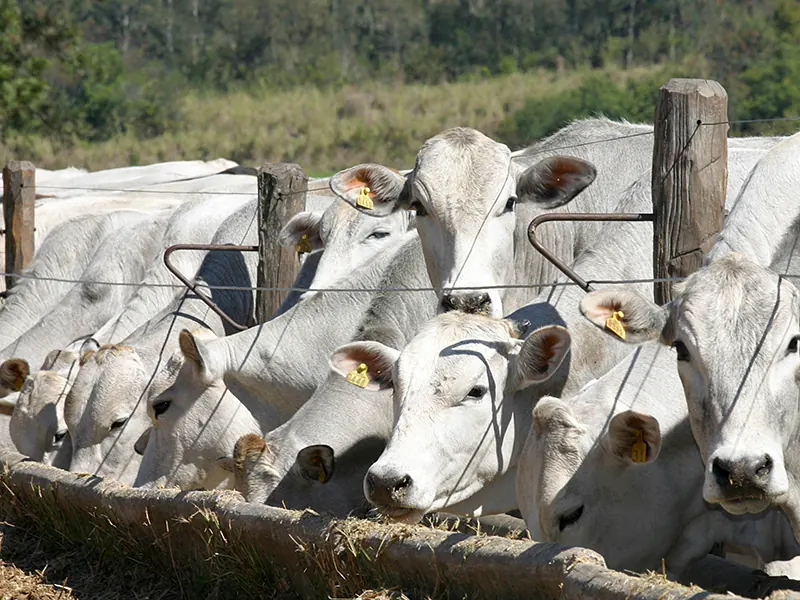
Beef cattle and feedlots
Higher production of microbial protein and consequently higher rates of animal weight gain. See the study on extruded urea in feedlot diets.
Product
Amireia 200 S is an extruded version of cattle urea, which has slow degradation and 200% crude protein. A complete protein additive, efficient and economical, which meets the requirements of large makers and farmers at a worldwide level.
200% crude proteinNPN sourceBeef and dairy cattle
Overview
Amireia 200 S is an extruded version of cattle urea, which has slow degradation and 200% crude protein. A complete protein additive, efficient and economical, which meets the requirements of large makers and farmers at a worldwide level.
It attends the protein supplementation of the herd via Non-Protein Nitrogen (NPN), raising the digestive capacity of ruminants and minimizing the cost of production, as well as providing safety for use all year, as it is a protected source of NPN.
Amireia 200 S is made by Amireia Pajoara in Brazil. In Europe and Asia it is sold and distributed by M-Credo AG, based in Herisau, Switzerland.
In the starea extrusion process the nitrogen from urea is captured by the corn starch. A laboratory study published in Scientific Reports describes the nitrogen release from extruded urea.
Advantages of use
The only cattle urea extruded with starch and sulfur, which guarantees higher production of microbial protein and consequently higher rates of animal weight gain.
Degradation for 12 hours in the rumen ensures higher rates of microbial growth due to the perfect timing of the readily available energy (extruded starch) with a slow release of nitrogen and sulfur.
Amireia 200 S avoids the excess of ruminal ammonia, eliminating the energy expenditure of metabolization, which allows directing the energy generated to the maintenance and/or growth of the animals.
Due to its extrusion process in the starch, it has excellent acceptance by the animals, which guarantees feed consumption even at higher levels of inclusion, eliminating the common rejection of the ureas on the market.
Amireia 200 S is ideal for replacing protein meal, as it reduces the final cost of protein, feed and protein salts.
Amireia 200 S is the only protected urea on the market that allows pelletization without losses of nitrogen and the consequent fall of the protein content of the feed.
Ideal for year-round use (dry and rainy seasons). It can get wet without risk of intoxication to the animals, even at higher percentages of NPN inclusion in the feed.
Cattle adapt quickly to Amireia 200 S (7 to 10 days), which allows the peak of production to be reached in less time and at lower cost, unlike the common ureas on the market, which require 15 to 30 days of adaptation.
Due to its high protein concentration (200%), it opens up space in the formulations, allowing more flexibility to include other raw materials.
Amireia 200 S is better used by the ruminal flora for the production of microbial protein, which considerably reduces the concentration of ammonia or urea in the urine, minimizing the contamination of the soil and the environment.
Amireia 200 S allows up to 50% of the protein of soybean meal to be replaced in dairy cattle feed, lowering the cost of feed production without any change in the production and quality of the milk.
Guarantee levels
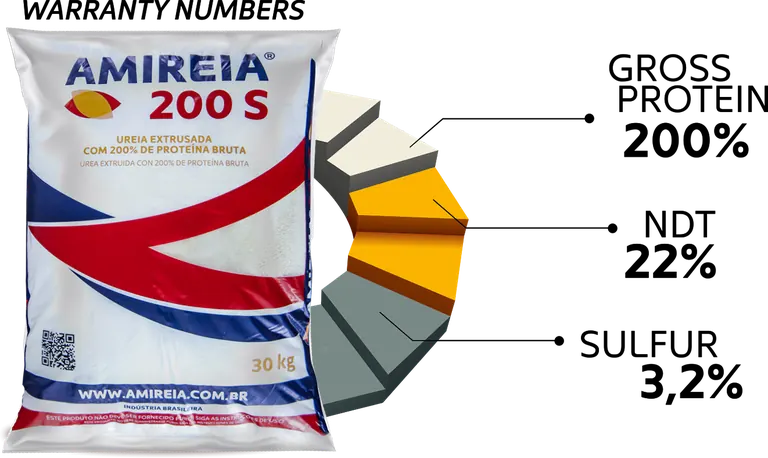
The guarantee levels of Amireia 200 S as printed on the product, sold in 30 kg bags.
The extruded urea analysed in Scientific Reports (2021) was composed of 70% livestock urea, 26.8% ground corn grain and 3.2% sulfur, with 200% protein equivalent.
| Parameter | Level |
|---|---|
| Crude protein | 200% |
| TDN (total digestible nutrients) | 22% |
| Sulfur | 3.2% |
| Packaging | 30 kg bag |
Use and dose
Safety dose. The safety dose of Amireia 200 S is 80 grams per 100 kg of animal live weight.
In studies with rumen-cannulated beef steers, the authors recommend supplying extruded urea at up to 80 g per 100 kg of body weight in balanced diets with 13% crude protein. In a feedlot trial with Nellore steers, weight gain was lower at 80 g and the authors recommend up to 70 g per 100 kg. Read about the digestibility of diets with extruded urea, the blood parameters of cattle fed extruded urea and extruded urea in the diet of finished steers.
Applications
Higher production of microbial protein and consequently higher rates of animal weight gain. See the study on extruded urea in feedlot diets.
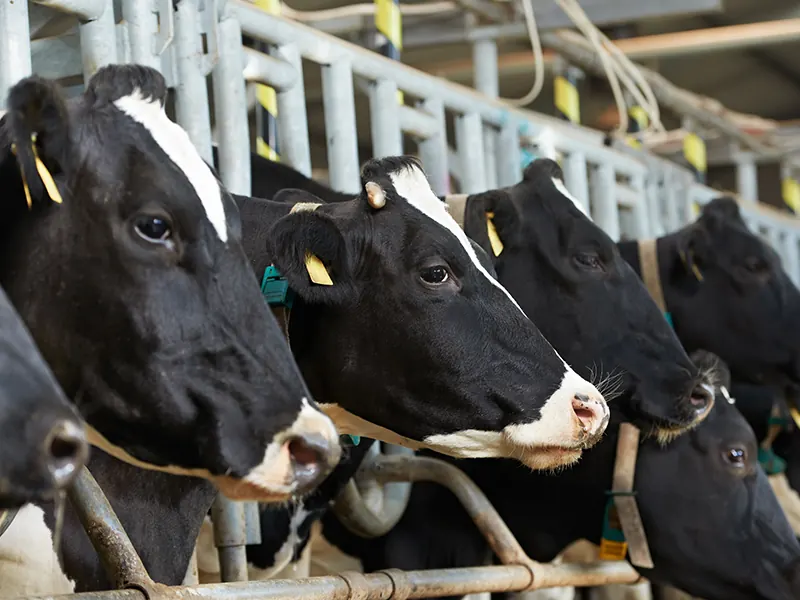
The best and most natural substitute for soybean meal, with excellent palatability, at a lower cost without changing milk quality.

Opens space in the formula, reduces the final cost of protein, feed and protein salts, and can be pelletized.
Studies
Eight technical studies on extruded urea in beef and dairy cattle, each available in PDF.
Questions and answers
Crude protein is calculated as nitrogen multiplied by 6.25, so non-protein nitrogen sources are rated by protein equivalent even though they contain no true protein. Amireia 200 S has a 200% crude protein equivalent: each kilogram supplies as much nitrogen as two kilograms of crude protein, which rumen microbes convert into microbial protein when fermentable energy is available.
Common urea is broken down by rumen microbial urease very quickly, producing an ammonia peak soon after feeding. Amireia 200 S is an extruded urea that degrades slowly, over about 12 hours in the rumen. This avoids excess ruminal ammonia, keeps nitrogen available while carbohydrates ferment and reduces urinary nitrogen losses. A laboratory study found that extruded urea released nitrogen more slowly than the unprocessed corn and urea mixture.
The safety dose of Amireia 200 S is 80 grams per 100 kg of animal live weight. In studies with beef steers the authors recommend up to 80 g per 100 kg of body weight in balanced diets with 13% crude protein; in a feedlot trial with Nellore steers the authors recommend up to 70 g per 100 kg. Confirm the ration with a qualified nutritionist. See use and dose.
Cattle adapt quickly to Amireia 200 S, in 7 to 10 days, which allows the peak of production to be reached in less time and at lower cost. The common ureas on the market require 15 to 30 days of adaptation.
Rumen microbes need sulfur to build sulfur-containing amino acids such as methionine and cysteine from non-protein nitrogen. Urea itself supplies no sulfur, so diets that rely on urea can become sulfur-limited. Amireia 200 S is extruded with sulfur as well as starch and urea, so nitrogen and sulfur reach the rumen together.
Yes, in part. Amireia 200 S can replace up to 50% of the soybean-meal protein in dairy cattle feed without changing milk yield or milk quality. Because non-protein nitrogen supplies rumen-degradable nitrogen only, the ration still needs enough fermentable energy and rumen-undegradable protein, so rebalance it with a nutritionist. In a trial with 20 Jersey cows, milk yield, fat and total solids did not differ when extruded urea replaced up to 50% of the soybean meal protein; milk protein was lower at 25% replacement and lactose at 37.5%.
Yes. Amireia 200 S can be pelletised without loss of nitrogen, so feed mills can include it in pelleted feeds and supplements. It has excellent palatability and can be used all year, in dry and rainy seasons, because it is not toxic when wet. As with any nitrogen ingredient, mix it evenly through the feed.
Talk to M-Credo
Tell us about your herd, feed operation or market in Europe or Asia and our team will get back to you.